How to Plant, Care for, and Feed Succulents in Hand-Painted Ceramic Planters
This post contains affiliate links, which means I may earn a small commission if you make a purchase—at no extra cost to you. I only share supplies I personally use and love.
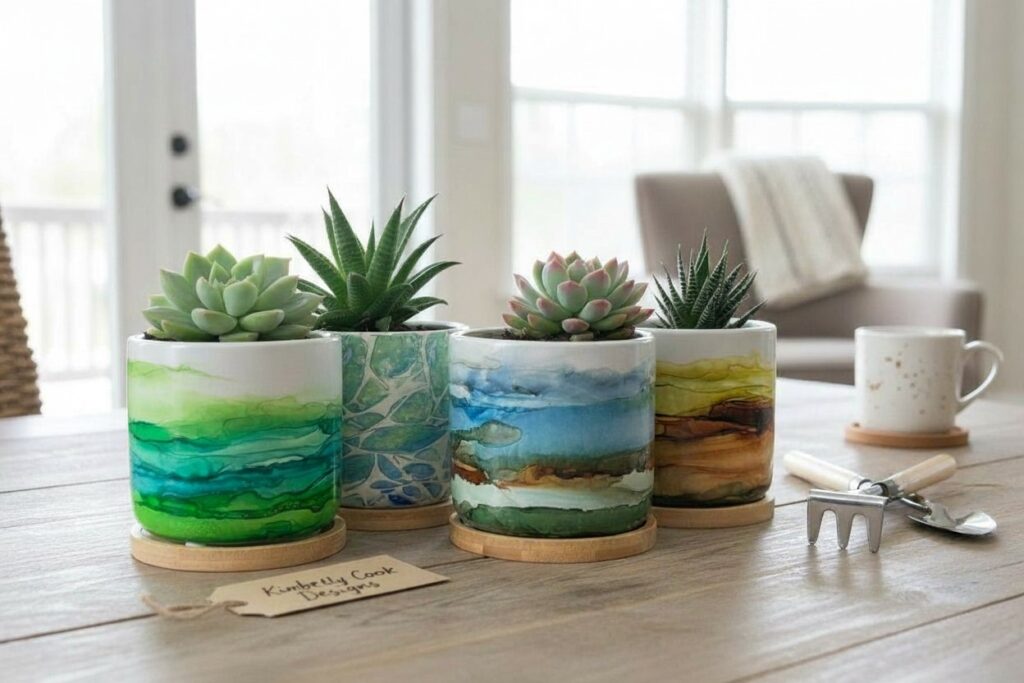
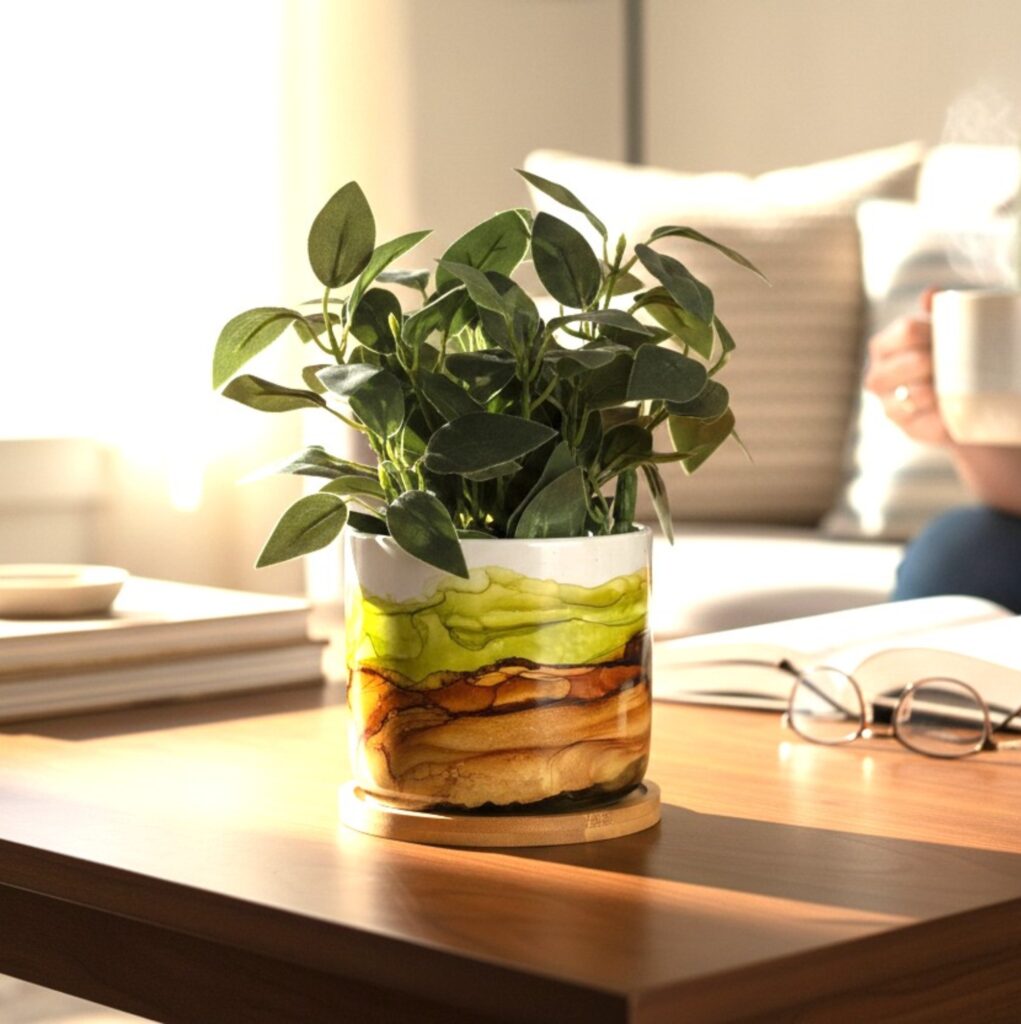
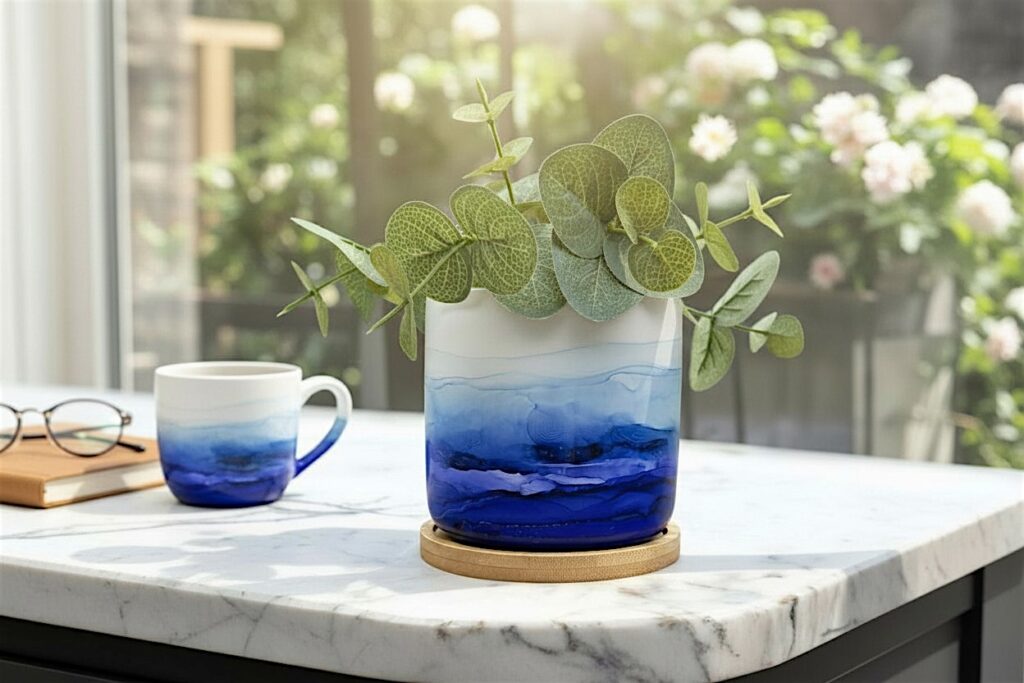
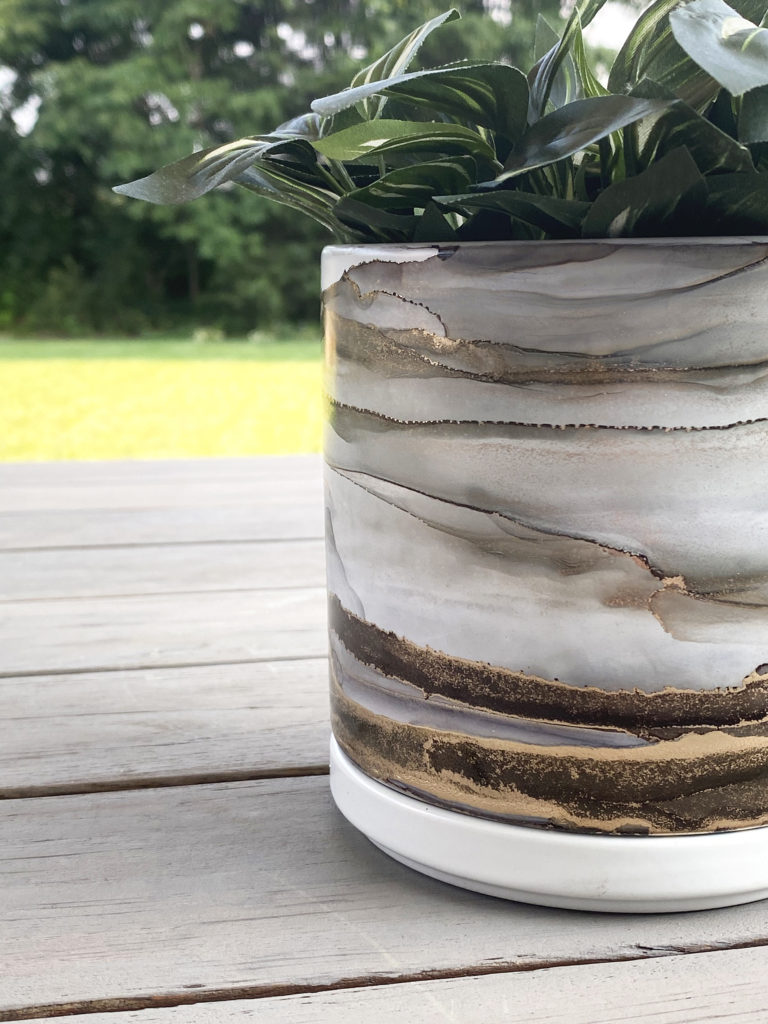
Succulents are some of my very favorite plants a great compliment to my hand-painted ceramic planters—especially my alcohol ink pieces. Their sculptural shapes, slow growth, and easygoing nature make them a perfect match for functional art. When planted correctly, they thrive and let the planter shine.
If you’ve ever wondered how to properly plant succulents in ceramic planters, how often to water them, or whether they even need fertilizer (spoiler: barely), this guide is for you.
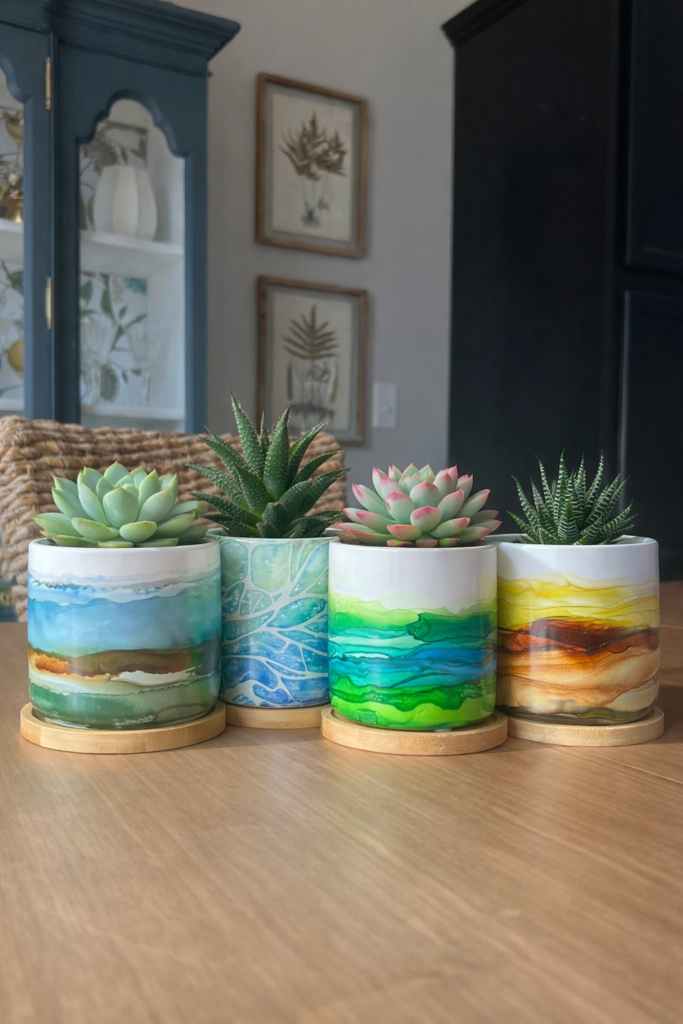
Why Succulents Are Perfect for My Hand-Painted Ceramic Planters
Succulents love:
- Excellent drainage
- Breathable containers
- Shallow root systems
- Minimal watering
That makes ceramic planters—especially those with drainage holes—an ideal home. My alcohol ink planters are sealed for protection, but they’re designed to be used, not just admired on a shelf. With the right setup, you can enjoy both the plant and the art for years to come
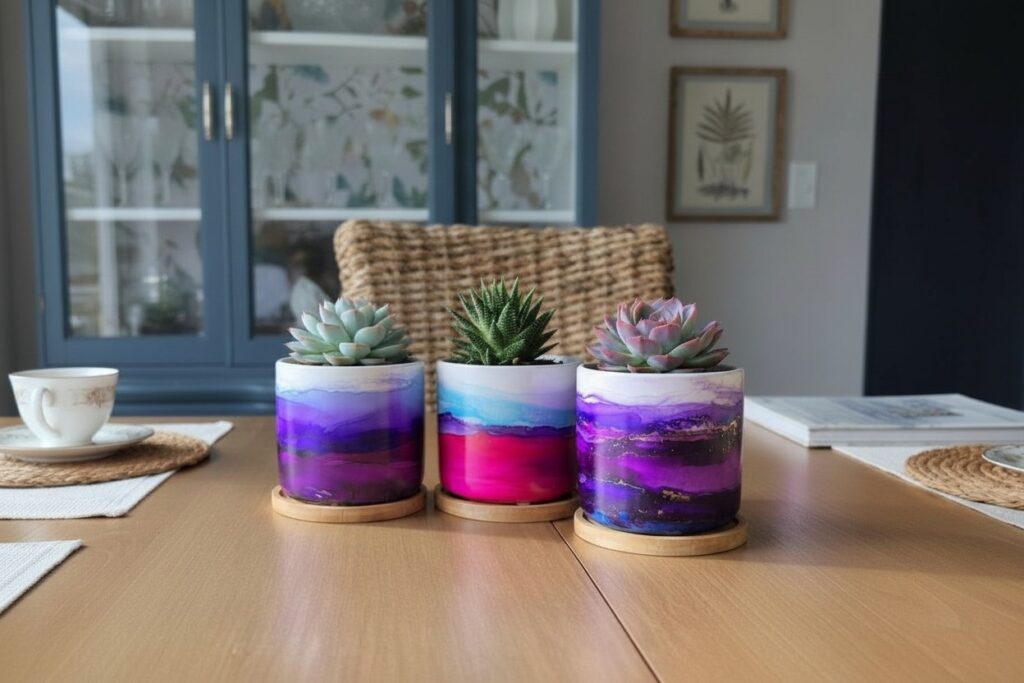
Here’s What You Will Need Before You Plant
Before you get started, gather these basics:
- A ceramic planter with a drainage hole. Visit here to find some of the hand painted planters in this post.
- A drainage plug or mesh grate (if your planter includes one). Our planters come with a plug, mesh grate and bamboo tray.
- Succulent or cactus-specific potting mix. Click here for the one that I regularly use. If you prefer an organic type this is a good choice.
- Small stones or pumice (optional, for airflow). Found here.
- Your succulent of choice. I have found mine primarily at Lowe’s.
Step-by-Step: How to Plant Succulents in Ceramic Planters
1. Start with Drainage (Always!)
Drainage is non-negotiable for succulents. If your planter has a drainage hole, use it. I often include a removable plug or drainage grate so you can control moisture while still protecting surfaces underneath.
If you’re placing the planter on wood or stone, a bamboo tray or saucer works beautifully.
2. Use the Right Soil
Standard potting soil holds too much moisture. Succulents need a fast-draining mix that dries quickly between waterings.
Look for:
- Gritty texture
- Added perlite, pumice, or sand
- Soil labeled specifically for succulents or cacti
3. Plant at the Correct Depth
Gently remove your succulent from its nursery pot and loosen the roots slightly. Nestle it into the soil so the base of the plant sits just above the soil line—never buried too deeply.
Lightly press the soil around it for stability, but don’t pack it down tightly.
4. Let It Rest Before Watering
This is important: wait 2–3 days before watering after planting. This allows any tiny root breaks to heal and helps prevent rot.
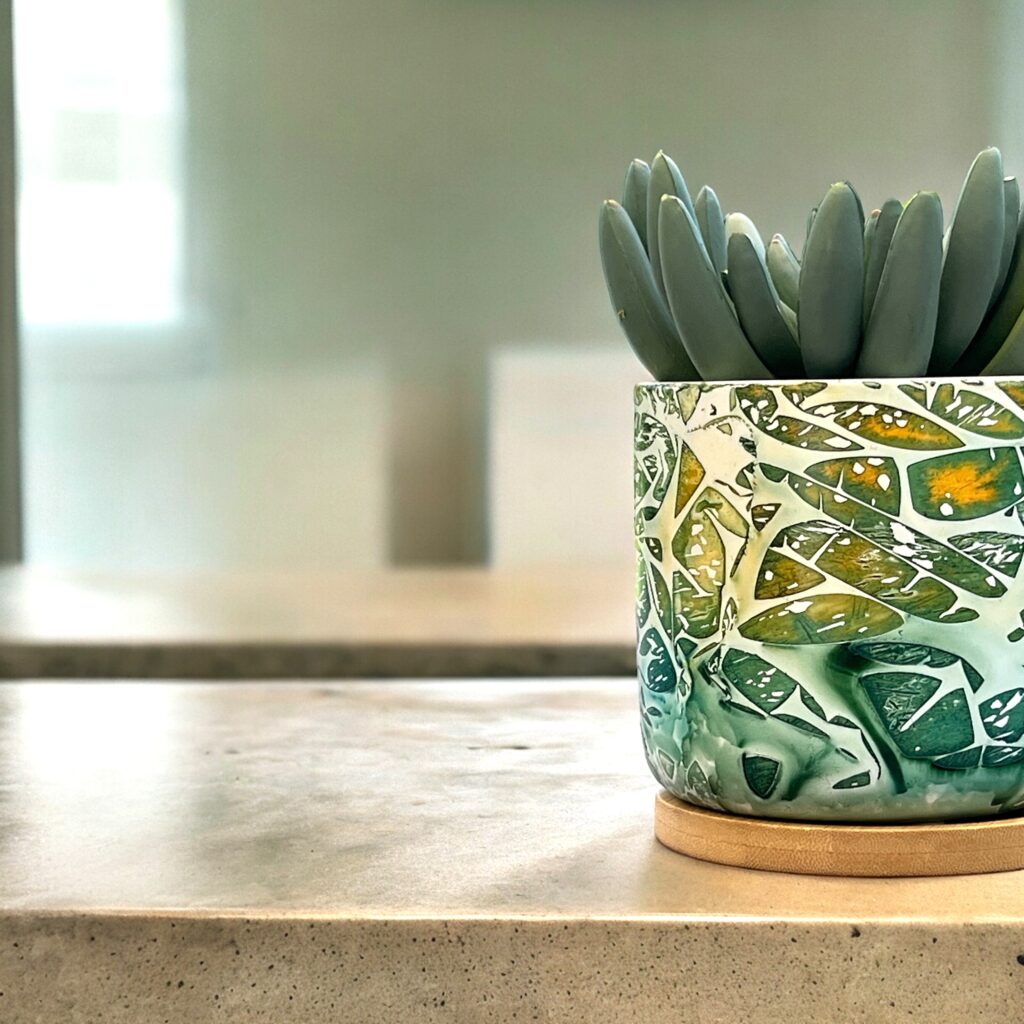
Watering: Less Is More
The number one mistake with succulents? Overwatering.
A Simple Rule:
Water only when the soil is completely dry.
When you do water:
- Water thoroughly
- Let excess water drain out the bottom
- Empty the saucer after a few minutes
Depending on your environment, this might mean watering every 10–14 days—or even less in winter.
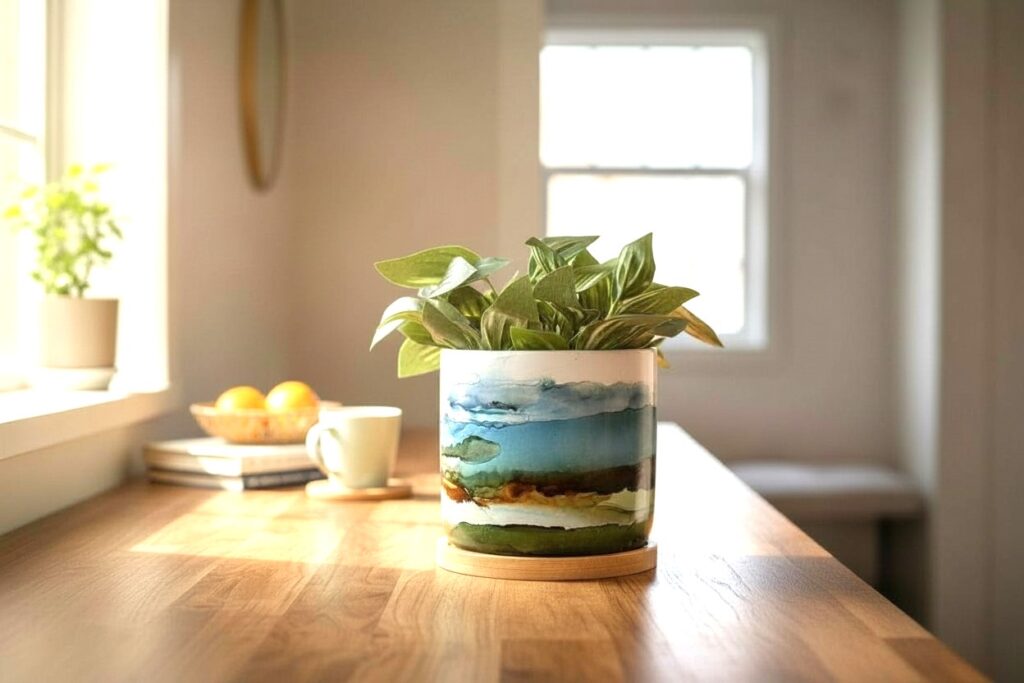
Light Requirements
Most succulents love bright, indirect light. A sunny windowsill is usually perfect.
Signs your plant needs more light:
- Stretching or leaning
- Pale or washed-out color
Too much direct sun, however, can scorch leaves—especially indoors. Rotate your planter occasionally so the plant grows evenly.
Feeding Succulents (Yes, But Gently)
Succulents are light feeders. They don’t need much, but a little boost during the growing season can help.
- Use a diluted succulent or cactus fertilizer, this is a popular one
- Feed only in spring and summer
- Skip fertilizing entirely in fall and winter
Over-fertilizing can lead to weak growth, so when in doubt—less is better.
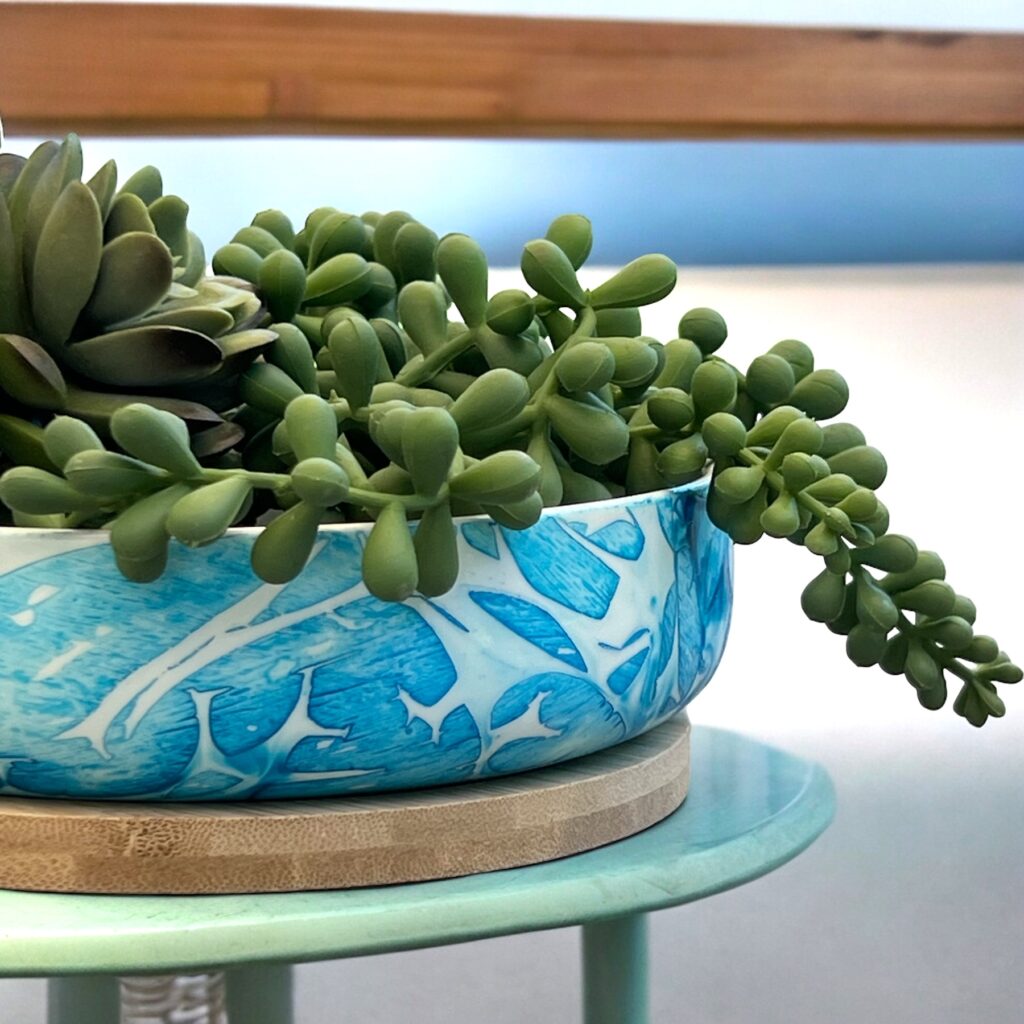
Caring for Your Hand-Painted Alcohol Ink Planter
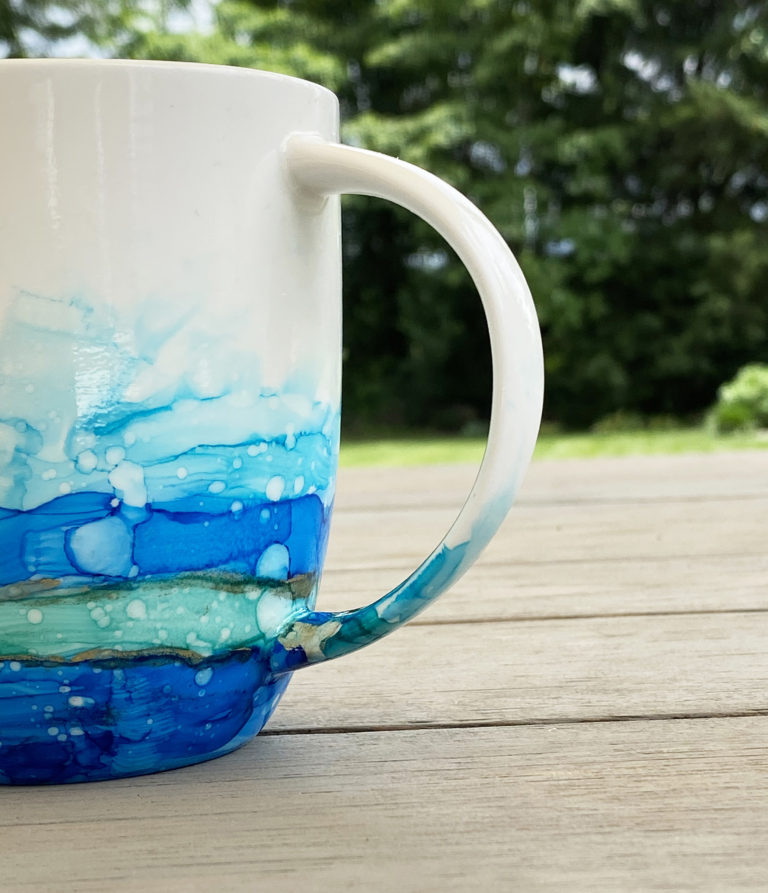
My alcohol ink planters are sealed to protect the artwork, but a few simple habits will keep them looking beautiful:
- Always use drainage
- Wipe spills promptly
- Avoid letting the planter sit in standing water
- Use felt pads or trays on delicate surfaces
Each piece is one-of-a-kind, and part of the joy is watching how the plant and the art evolve together over time.
Final Thoughts
Succulents and hand-painted ceramic planters are a natural pairing—low-maintenance, artistic, and endlessly giftable. With proper planting, thoughtful watering, and a little light, your succulent will thrive while your planter becomes a true focal point in your space.
If you’re just starting out, don’t overthink it. Succulents are forgiving, and half the fun is learning as you go.